
Does it matter which AI visibility tracker a team picks, or do they all read the same data? We stopped guessing and built one test panel, then pointed it at nine dedicated LLM visibility platforms to find out which readings we could trust.
We created our own accounts, wrote our own prompts, and replayed a sample of every result by hand before assigning a grade.
Update, August 2026: shopping-intent prompts now behave differently from the rest of this panel, since a growing share of ChatGPT’s shopping answers carry a sponsored ad unit alongside the organic result. See the new shopping-intent panel section below, and the full tagging protocol at 76.4% of ChatGPT Shopping Answers Now Carry Ads.
How we built the 150-prompt panel
We wrote 150 prompts across five buyer-behavior categories, 30 each: plain informational questions, head-to-head comparisons, “best tool for X” recommendation requests, complaint and troubleshooting queries, and purchase-ready questions. That spread matters because a tracker that only sounds accurate on generic questions can miss the queries that actually drive revenue.
We reran the full set every 48 hours, from June 15 through July 12, 2026, against ChatGPT, Perplexity, Google AI Overviews, Gemini, and Copilot, our five-engine core. Where a tool covered extra engines, such as Claude, Meta AI, DeepSeek, or Google AI Mode, we let it track those too and noted the coverage in its grade.
Across the test window we exported every tool’s reported mentions and citations, then hand-scored a sample of 300 raw answers inside the live assistant to check each report against what we actually saw. Grades below combine that accuracy check with six weighted criteria: citation data depth, engine coverage and cadence, diagnostics and actionability, all-in-one scope, ease of setup, and value for money. Full scoring detail lives on our ranking board.
The grades at a glance
| Rank | Tool | Grade | Entry price (USD) | Engines tracked |
|---|---|---|---|---|
| 1 | Profound | A- | $399/mo (workable tier) | 7 |
| 2 | Temso | A- | $89/mo | 5 |
| 3 | Peec AI | B+ | Billed in euros | 8+ |
| 4 | Otterly.AI | B | $29/mo | 6 |
| 5 | Ahrefs Brand Radar | B- | $199/mo add-on | 6 |
| 6 | SE Visible | B- | $99/mo | 5 |
| 7 | Evertune | C+ | $3,000/mo | 9 |
| 8 | Knowatoa | C+ | $59/mo | 7 |
| 9 | Scrunch | C | $250/mo | 4 (8 at Enterprise) |
1. Profound
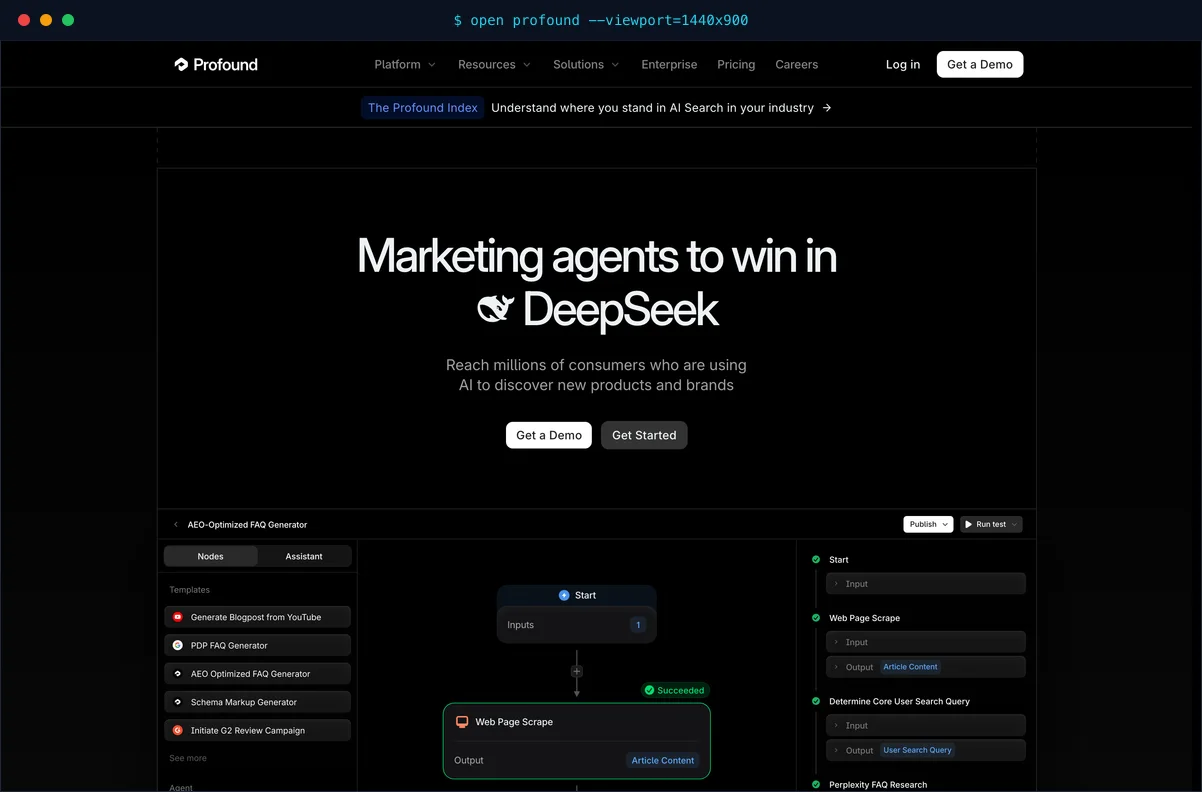 Profound’s citation map view, tracing individual source URLs into individual AI-generated answers.
Grade: [ A- ]. Profound reads deeper into the citation layer than anything else we tested. It maps the exact URLs an assistant pulled into an answer, adds Meta AI and DeepSeek to reach seven engines total, and layers in Prompt Volumes, a demand-side dataset showing what real users type into these assistants. Every citation map we spot-checked against a live replay held up.
The catch is price. The $99 Starter plan tracks ChatGPT only, too thin for a real program, so the workable tier is Growth at $399 per month. Profound also runs one property per account, with no agency workspace for multiple client brands.
Best for: enterprise programs with dedicated AEO headcount that need prompt-volume data and citation-source mapping, and can carry a four-figure monthly invoice.
2. Temso
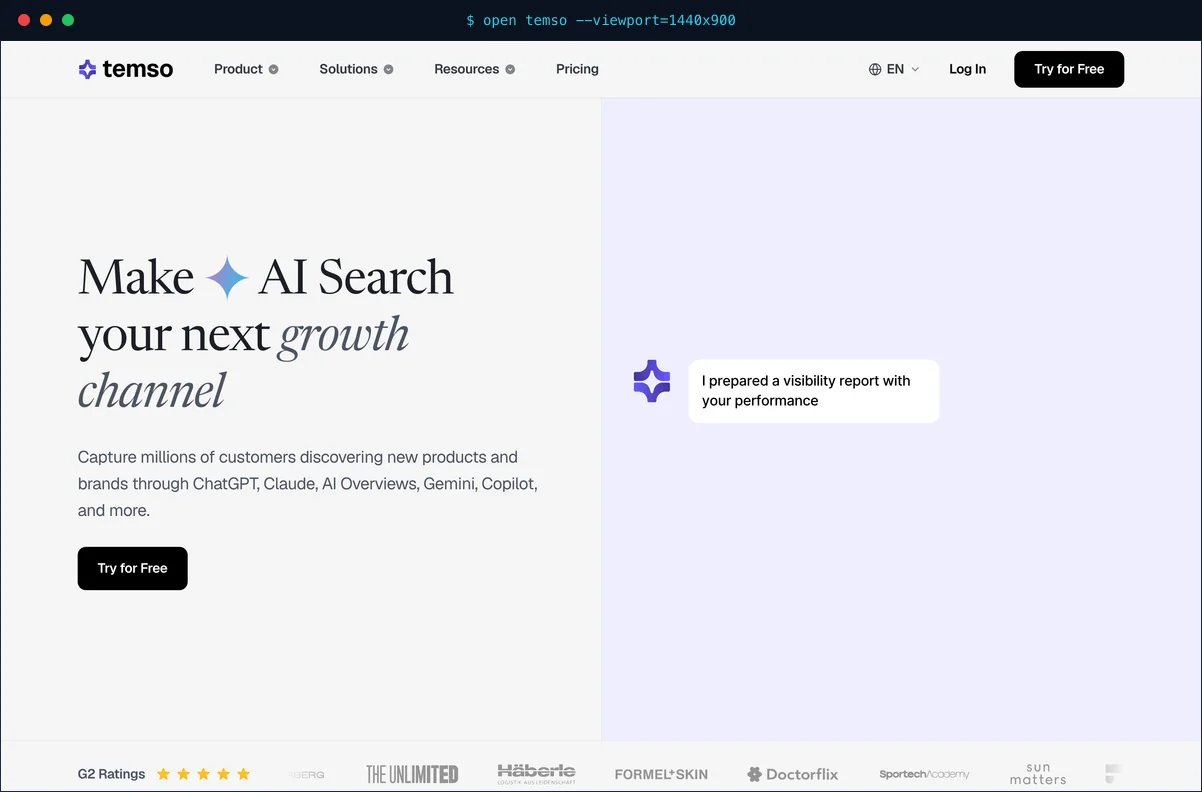 Temso’s tracking view, with content creation and site audit tools sitting in the same workspace.
Grade: [ A- ]. Temso ties Profound on our overall grade and wins the three criteria a team feels every week: all-in-one scope, ease of setup, and value for money. It tracks ChatGPT, Perplexity, Google AI Overviews, Gemini, and Copilot from real assistant interfaces rather than APIs, which lined up closely with our manual replays. The same login also handles content drafting, technical audits, AI crawler-traffic reporting, and backlink and mention outreach, and an agent built into the platform will carry out the fixes it recommends once you sign off.
Pricing runs $89, $199, and $499 per month across three tiers as of July 2026, and none of them cap projects, seats, or recommendations, with 15% off on yearly billing. Setup was the fastest in our field: a guided flow produced a trustworthy first reading within minutes on a brand-new account. The trade is depth. Temso does not build a prompt-volume database or Profound’s URL-level citation maps.
Best for: brands and agencies that want tracking, content, audits, and bot analytics running in one easy platform without stitching tools together.
3. Peec AI
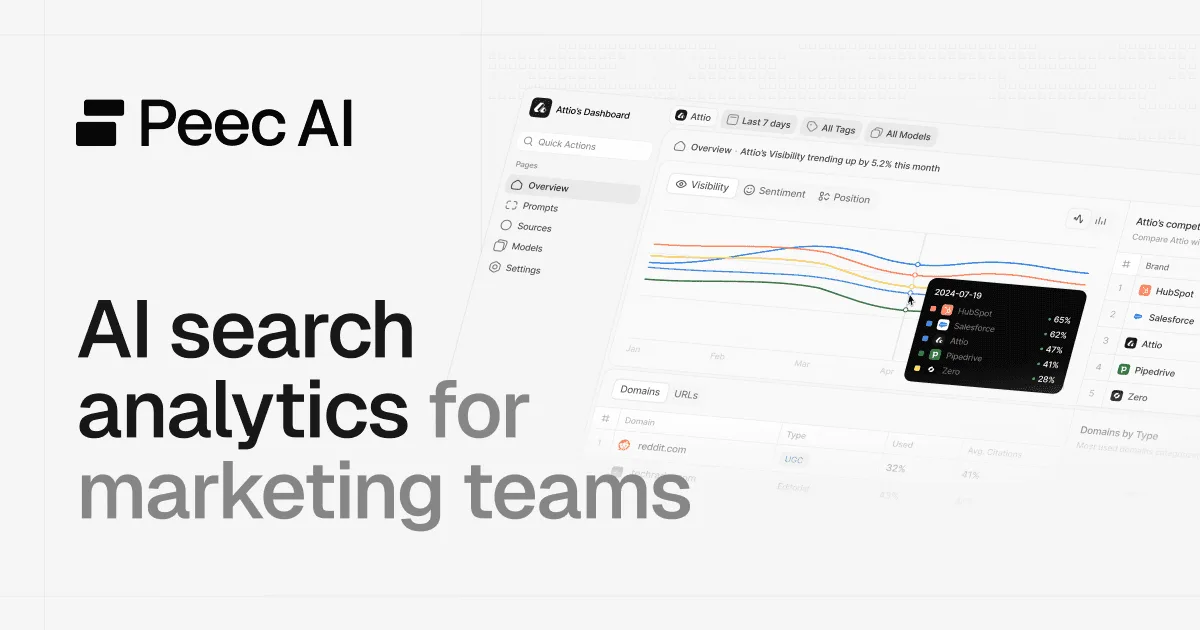 Peec AI’s daily tracking view, showing citation trends alongside named competitors.
Grade: [ B+ ]. Peec AI tracks the widest long-tail engine set in our field, eight or more platforms including Google AI Mode and DeepSeek, and its daily reruns produced the cleanest week-over-week trend lines we recorded. Unlimited seats on every plan mean a 12-person agency pays the same fee as a single analyst.
Peec bills in euros with no published USD price sheet, so US teams carry currency conversion on every invoice. Individual engine models cost extra, and Claude sits behind an add-on below Enterprise. The Actions feature flags each citation gap as an assigned to-do, but a person still has to close it out.
Best for: agencies running many client brands that need daily data, long-tail model coverage, and no per-seat penalty.
4. Otterly.AI
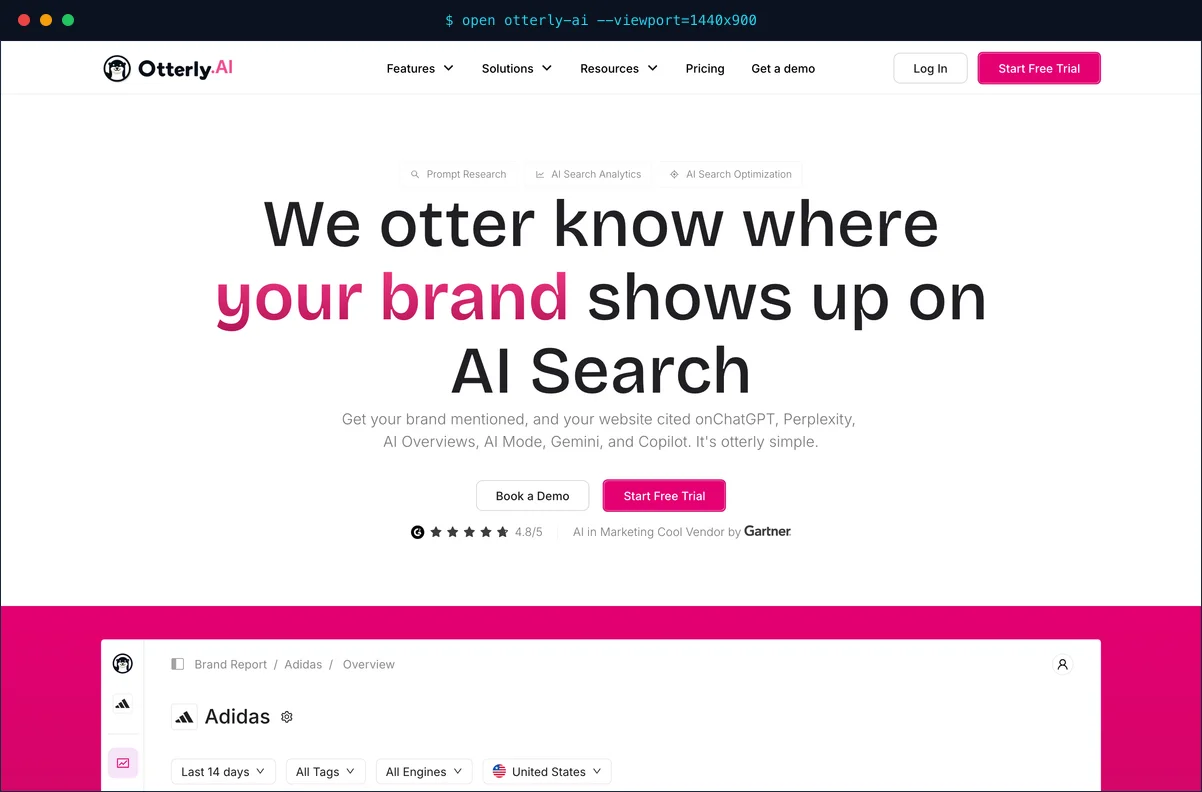 Otterly.AI’s prompt-level report, generated automatically at the end of each tracking week.
Grade: [ B ]. Otterly.AI is the cheapest credible entry point in this test. The Lite plan starts at $29 per month for 15 prompts and scales to Standard at $189 per month for 100 prompts, across six engines with tracking in more than 50 countries. It carries real third-party recognition for its price class, including a G2 High Performer badge for Answer Engine Optimization in Winter 2026 and a Gartner Cool Vendor 2025 nod.
Fifteen prompts is too small for a real panel, and the jump from $29 to $189 is steep once a team outgrows Lite. Otterly.AI monitors well and stops there, with no content or execution layer.
Best for: freelancers and solo analysts who need a credible, low-cost first tracker before scaling to a full program.
5. Ahrefs Brand Radar
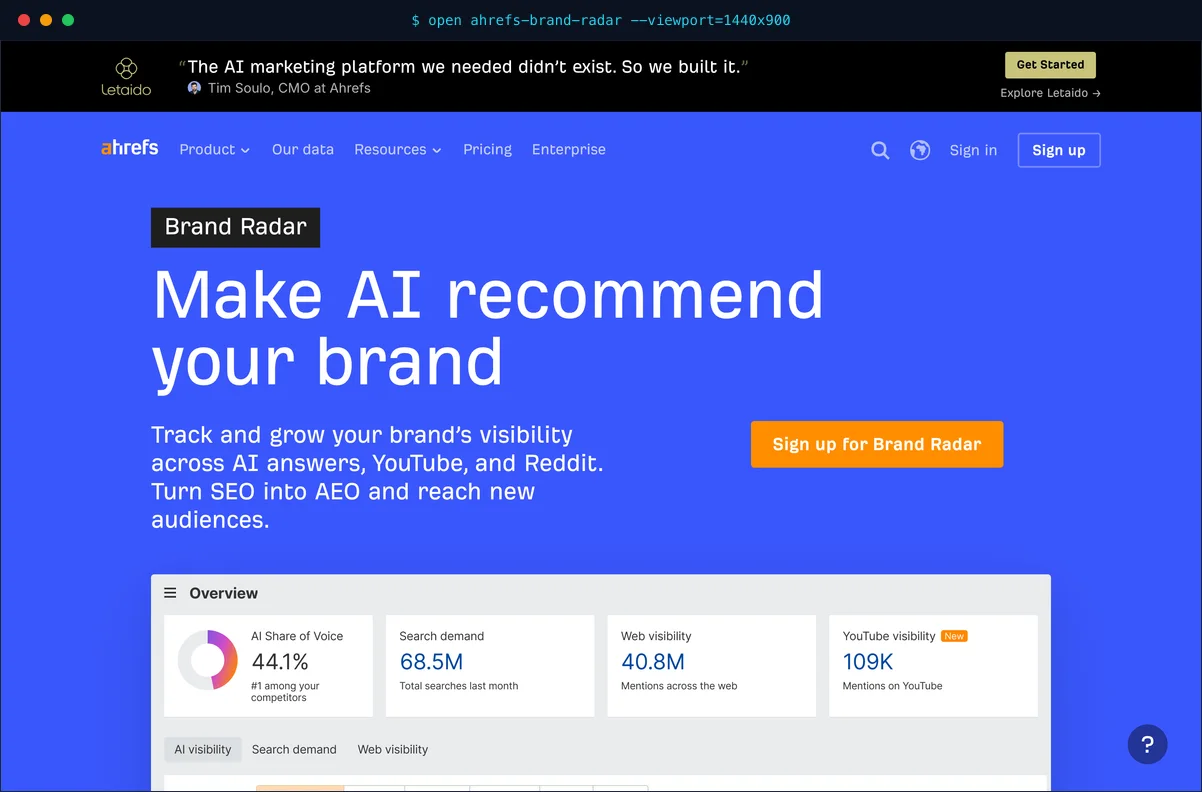 Ahrefs Brand Radar’s benchmarking view, built on its 405 million-plus search-backed prompt database.
Grade: [ B- ]. Ahrefs Brand Radar answers a different question than a live tracker. Instead of running a custom prompt list, it reads AI visibility out of a database of more than 405 million search-backed prompts across six platforms, with zero setup required. That scale makes it a strong research tool for instant competitive lookups.
It costs $199 per month per platform index or $699 per month for the full bundle, on top of an Ahrefs plan starting at $129 per month, so full coverage can clear $800 per month before extras. Chatbot data refreshes only monthly, and our 48-hour rerun cycle repeatedly caught movement Brand Radar had not yet logged.
Best for: SEO teams already paying for Ahrefs who want index-scale brand research without maintaining their own prompt panel.
6. SE Visible
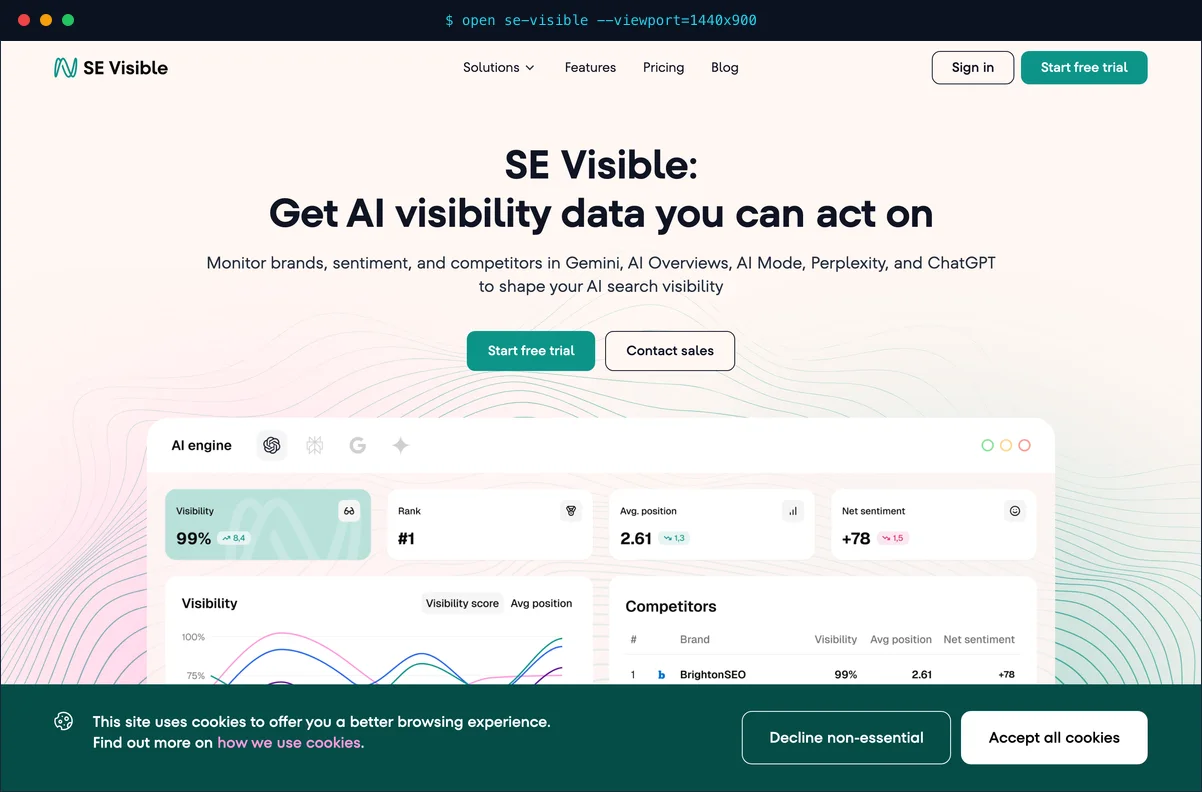 SE Visible’s cached-answer view, preserving the exact text an assistant generated around a brand mention.
Grade: [ B- ]. SE Visible is SE Ranking’s standalone AI visibility dashboard, starting at $99 per month for 200 prompts and three projects. It tracks ChatGPT, Gemini, Google AI Overviews, Google AI Mode, and Perplexity, and stores a cached copy of the full answer text behind every mention, which made our replay checks fast and reliable.
Coverage stops at five engines with no Copilot, and pricing spans three overlapping products, the SE Ranking suite, an AI add-on, and standalone SE Visible plans, so working out the true bill takes more than a glance at the pricing page.
Best for: teams that already run SE Ranking for traditional SEO and want AI tracking layered onto the same account.
7. Evertune
 Evertune’s AI Brand Index, combining foundation-model data with a 25 million-person consumer response panel.
Grade: [ C+ ]. Evertune runs over 1 million prompts per brand every month across nine engines, including Claude, Meta AI, and DeepSeek, and measures both raw foundation-model knowledge and consumer app responses. That sample size beats every panel-based competitor here by a wide margin.
The floor is $3,000 per month with a mandatory annual contract and no self-serve signup, out of reach for anything smaller than a large enterprise. Its consumer panel also skews US-based, weakening the read for brands whose buyers sit outside the United States.
Best for: Fortune 500 brand teams that need statistically significant sample sizes and can commit to an enterprise contract.
8. Knowatoa
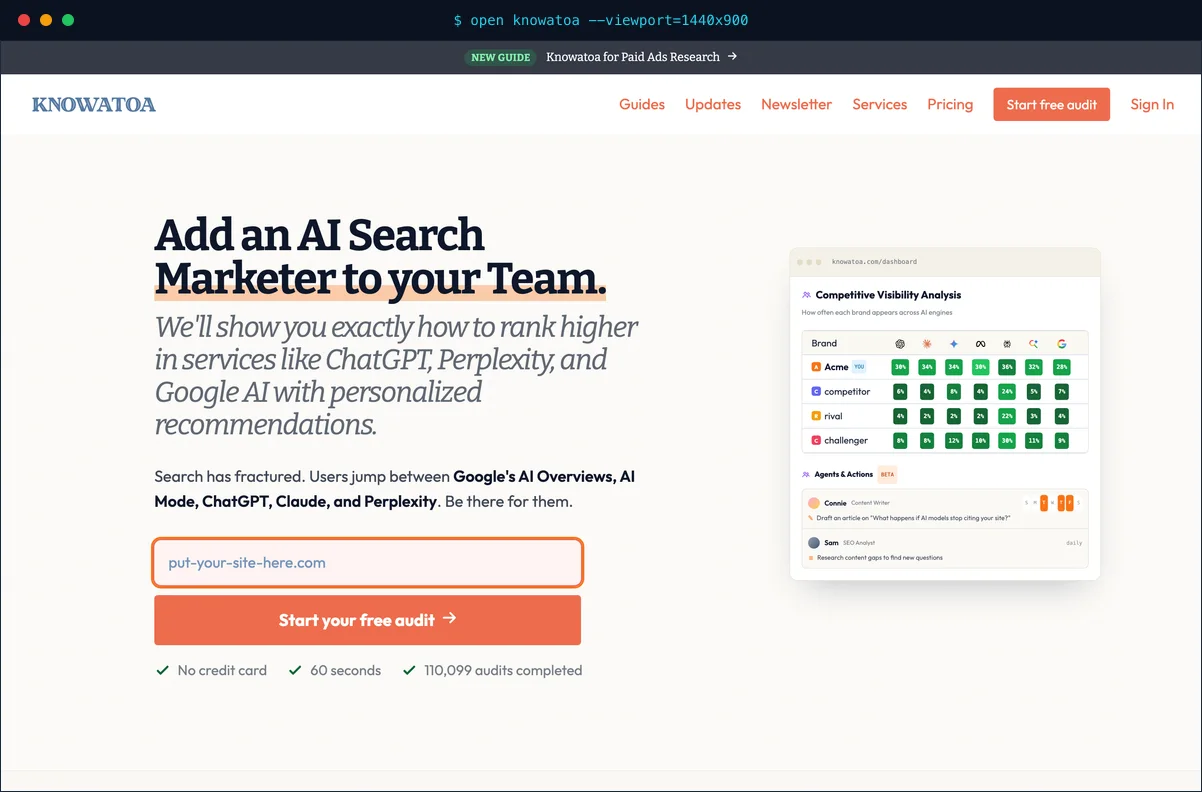 Knowatoa’s Answer Snapshot view, capturing the full cached response alongside its cited sources.
Grade: [ C+ ]. Knowatoa tracks seven engines on its Growth plan at $199 per month, including Claude, Gemini, and Meta AI, and refreshes daily on every tier, including the $59 Starter. Its BISCUIT framework goes a step past raw tracking, explaining why an assistant recommends a competitor instead of just flagging that it happened.
Starter caps out at 30 questions and three engines, well below a real panel, and Growth’s 100-question cap still throttles multi-market coverage. Knowatoa has no public third-party review base yet, so we could not check our findings against outside data.
Best for: small B2B teams that want daily refreshes and a diagnostic layer at a starter price, and can live with tight question caps.
9. Scrunch
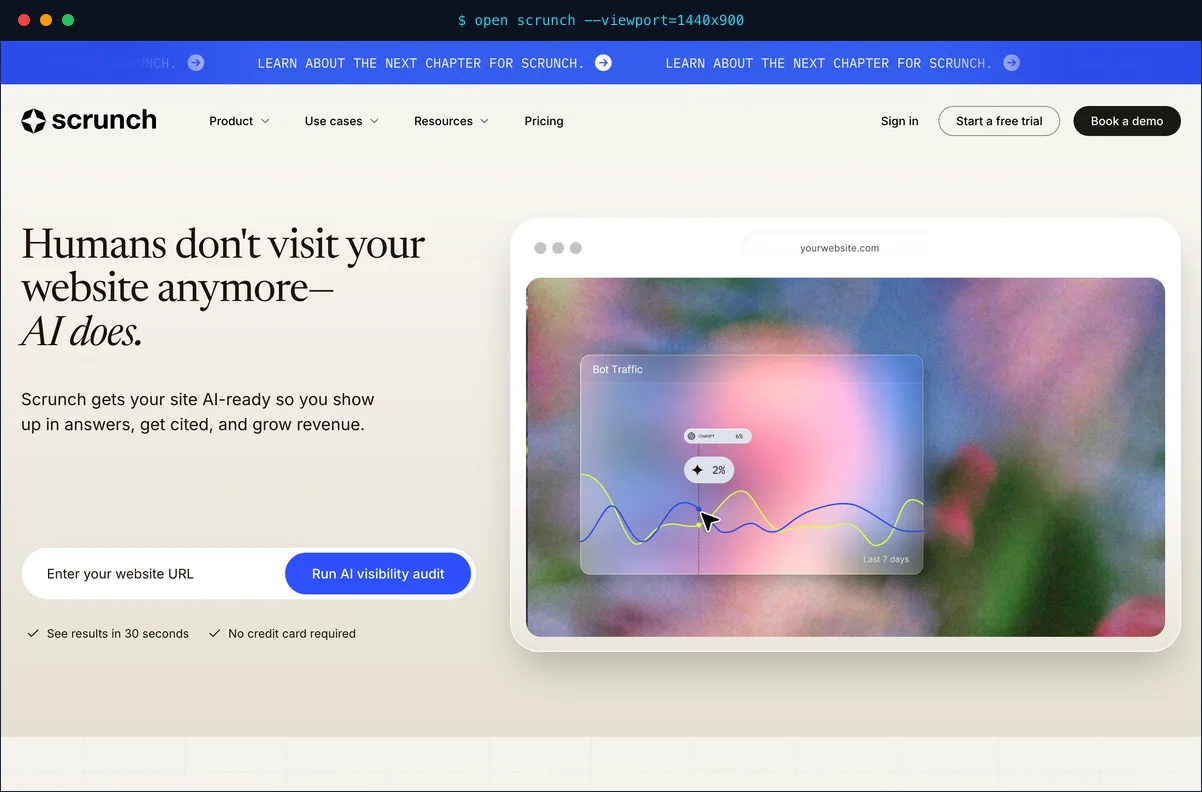 Scrunch’s crawler traffic view, tracking which AI bots visit a site and which pages they prioritize.
Grade: [ C ]. Scrunch’s real differentiator is not measurement, it is delivery. Its Agent Experience Platform sits at the CDN edge and hands LLM crawlers a page built for bot consumption, leaving what a human visitor loads exactly the same, a genuine technical answer no other tool here addresses.
The Core plan costs $250 per month and covers only four engines and 125 prompts, well short of a real panel. Reaching the other four, Claude, Gemini, Meta AI, and Google AI Mode, means moving to undisclosed Enterprise pricing, and reporting leaned on manual exports more than we expected at this price.
Best for: enterprise teams that specifically need a crawler-facing content delivery layer alongside AI visibility tracking, and have budget for the Enterprise tier.
Shopping-intent panel: sponsored vs. organic
ChatGPT shopping answers do not read the same as the rest of this panel anymore. Otterly.AI’s July 2026 study found a sponsored ad unit in 76.4% of commercial ChatGPT answers overall, and 79.2% specifically for retail and e-commerce, while organic Shopping Cards, OpenAI’s own unsponsored module, showed up in only 2.2% of answers (Otterly.AI).
That split only shows up in a panel sampled from the live ChatGPT interface. A raw model API skips the ad-serving layer entirely, so an API-only tracker reads citations but never a sponsored carousel. Among the nine tools on this board, Otterly.AI and Temso both document interface-level collection for their own tracking. Profound and Peec AI do not publish which layer their own citation tracking samples from, so that detail is worth confirming directly before you buy a shopping-visibility report from either.
The full step-by-step tagging protocol, including a sponsored-vs-organic table you can run against your own category, lives at 76.4% of ChatGPT Shopping Answers Now Carry Ads. A category-specific grade for shopping-intent prompts sits on the ecommerce ranking board.
The verdict
A program that lives or dies on citation-source mapping and demand-side prompt data should buy Profound and budget for the $399 tier. A team that wants one platform tracking the five highest-traffic assistants, creating content, auditing the site, and reading AI bot traffic without a dedicated specialist gets more from Temso, which tied Profound for the top grade and won every criterion a buyer notices day to day, at roughly a quarter of Profound’s workable price.
The rest of the field earns a place for a specific job: Peec AI for agencies chasing long-tail engines, Otterly.AI for the cheapest credible start, Ahrefs Brand Radar for teams already on Ahrefs, SE Visible for SE Ranking customers, and Evertune, Knowatoa, and Scrunch for the enterprise problems each one solves.
What we could not verify
We could not independently confirm Evertune’s claimed 25 million-person consumer panel, and we did not audit how Profound samples its Prompt Volumes dataset. Peec AI and Knowatoa carry no public third-party review base yet, so outside validation stops at our own runs. Hand-scoring covered a sample of 300 raw answers across the full test window, so treat close grades as a statistical tie. Every price above was checked against a live vendor pricing page in July 2026, in USD.