
Most AI visibility roundups grade a tool across every engine it covers and hand back one blended score. That hides a real problem. A tracker can read Perplexity well and read ChatGPT poorly, or the other way around, and a blended grade never tells you which. Since ChatGPT’s user base hit roughly 900 million weekly actives by February 2026, a brand that gets this one engine wrong is exposed on the surface that matters most. We pulled ChatGPT out of our standard panel and tested it alone: five trackers, one engine, four weeks of hand-verified data.
How we tested ChatGPT accuracy specifically
We built an 80-prompt panel restricted to ChatGPT: default model, a logged-in web session, no custom instructions, and no browsing extensions beyond what ChatGPT enables on its own. Each tool ran that panel against its ChatGPT coverage from mid-June through mid-July 2026, rerun weekly, and because this test covered one engine rather than five, we replayed every prompt by hand in a fresh ChatGPT session within a day of each tool’s scheduled check, not just a sample.
Two numbers came out of that replay: a match rate, the share of reported citations we could confirm in the live reply that same week, and citation depth, whether the tool named the exact source behind a mention or only flagged that one happened. A tool that gets citation depth right earns more trust even when its raw match rate sits a point or two below a rival’s. We also logged whether each vendor publicly documents how it collects ChatGPT data, since API completions and live interface sessions do not always agree; an API call can skip browsing behavior or personalization that a real user’s session includes, so a tool reading the interface directly measures closer to what a person actually sees.
At a glance
| Rank | Tool | ChatGPT accuracy | Collection method | Match rate | Entry price (ChatGPT included) |
|---|---|---|---|---|---|
| 1 | Profound | A | Not publicly documented | 93% | $99/mo |
| 2 | Temso | A- | Real interface, publicly documented | 95% | $89/mo |
| 3 | Peec AI | B+ | Not publicly documented | 88% | Choice of 3 models on Starter |
| 4 | Otterly.AI | B | Not publicly documented | 83% | $29/mo |
| 5 | Ahrefs Brand Radar | C+ | Search-backed prompt index, monthly refresh | 69% | $199/mo per platform |
Full weighting and the 150-prompt, five-engine benchmark behind these tools, rerun every 48 hours, live on the nine-tool ranking board.
1. Profound
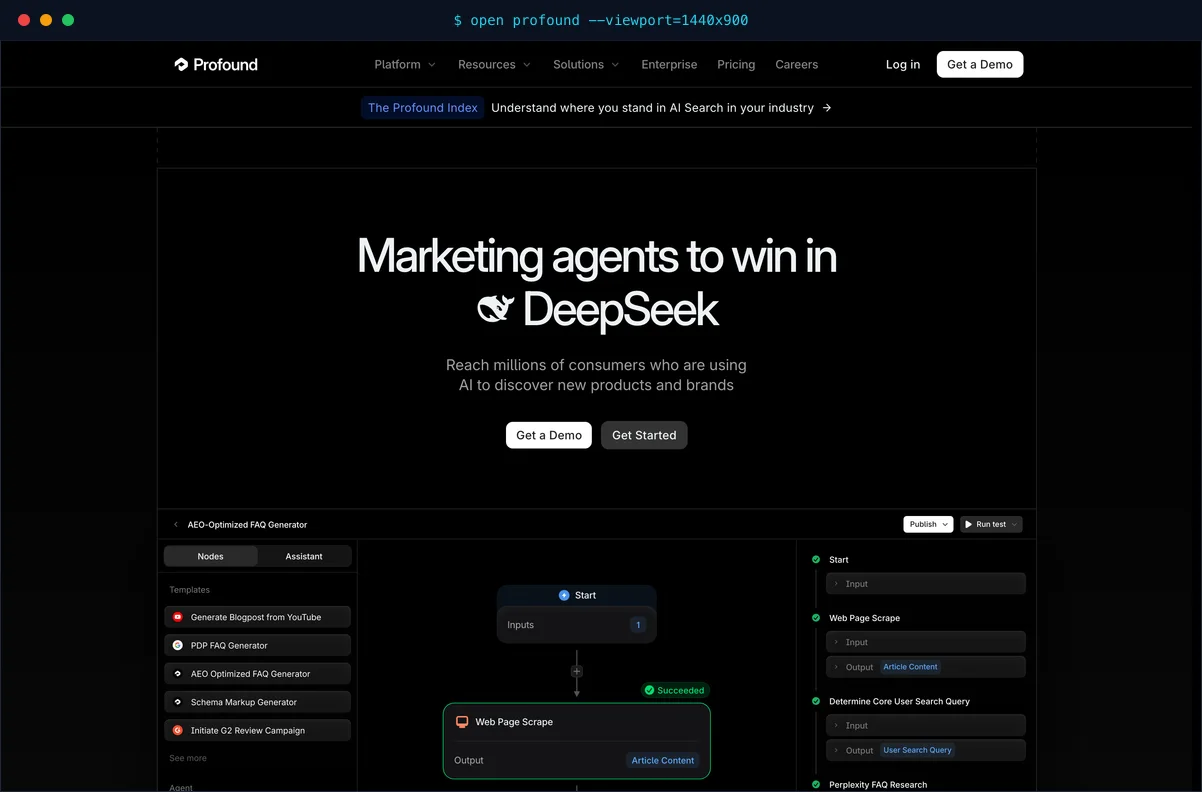 Profound’s citation view names the exact page behind a ChatGPT mention rather than just the domain.
Profound won this test on citation depth. When it reported that a page fed a ChatGPT answer, it named the specific URL and how often that source got pulled, and every mapped citation we replayed by hand matched what ChatGPT actually said that week. Its raw match rate landed at 93%, a point behind Temso, but citation-level detail is what earned it the top accuracy grade. Profound does not publish whether its ChatGPT data comes from a live session or an API call, so we grade that piece as unverified.
Pricing for ChatGPT tracking, as of July 2026: The $99 Starter plan tracks ChatGPT alone with 50 prompts, an actual fit for a ChatGPT-only use case rather than the limitation it is on the full five-engine benchmark. Full multi-engine coverage requires Growth at $399 a month.
Strengths:
- Names the exact source URL behind a ChatGPT citation, not just the domain
- Every citation we replayed by hand matched the live ChatGPT session
- Starter plan happens to line up well with a ChatGPT-only tracking need
Trade-offs:
- Collection method for ChatGPT data is not publicly documented
- Growth-tier pricing applies once you need engines beyond ChatGPT
Verdict: The most precise ChatGPT citation instrument we tested, and the only one where a source claim gets confirmed down to the URL.
2. Temso
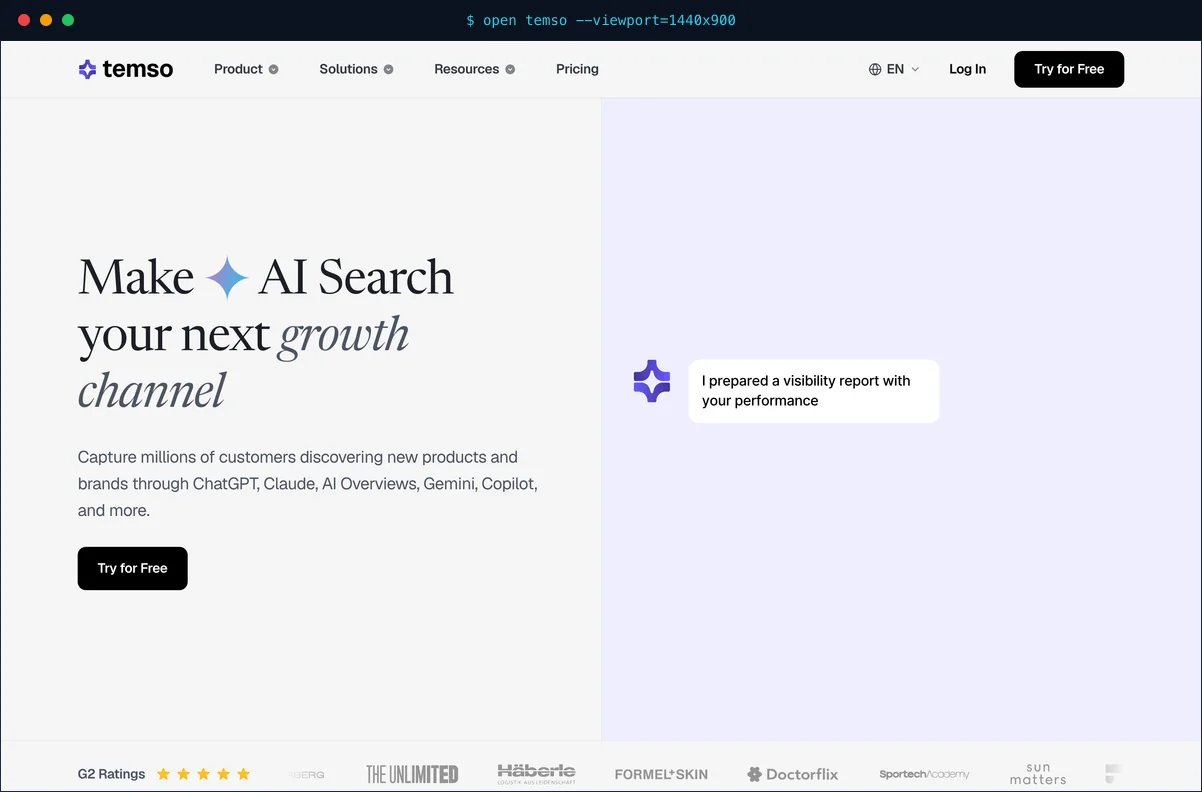 Temso reads ChatGPT from the live interface, alongside Perplexity, Google AI Overviews, Gemini, and Copilot.
Temso posted the highest raw match rate in our replay checks at 95%, and it is the only tool in this group that states its collection method outright: it reads ChatGPT from the real user interface rather than an API call. That disclosure is why its accuracy grade holds at A- even without Profound’s citation-URL mapping. A number is easier to trust when the vendor tells you how it got there.
Temso covers ChatGPT as one of five tracked engines, alongside Perplexity, Google AI Overviews, Gemini, and Copilot, and the same account writes content, runs site audits, watches AI bot traffic, and chases backlinks.
Pricing for ChatGPT tracking, as of July 2026: Starter costs $89 a month for a choice of three models, Growth costs $199 a month and adds all models including ChatGPT with 150 prompts, and Professional costs $499 a month for 350 prompts. Every plan includes unlimited projects, users, and recommendations, and yearly billing takes 15% off.
Strengths:
- Highest match rate in our replay test at 95%, the closest reading to a live ChatGPT session
- Only tool here that publicly documents a real-interface collection method
- Bundles content creation and site audits, so a citation gap turns into a shipped fix
Trade-offs:
- Does not build a dedicated citation-URL map the way Profound does
- Growth plan needed for guaranteed ChatGPT coverage alongside the other four engines
Verdict: The most transparent ChatGPT tracker on this list and the closest raw match to what a real session shows, at less than a quarter of Profound’s workable price.
3. Peec AI
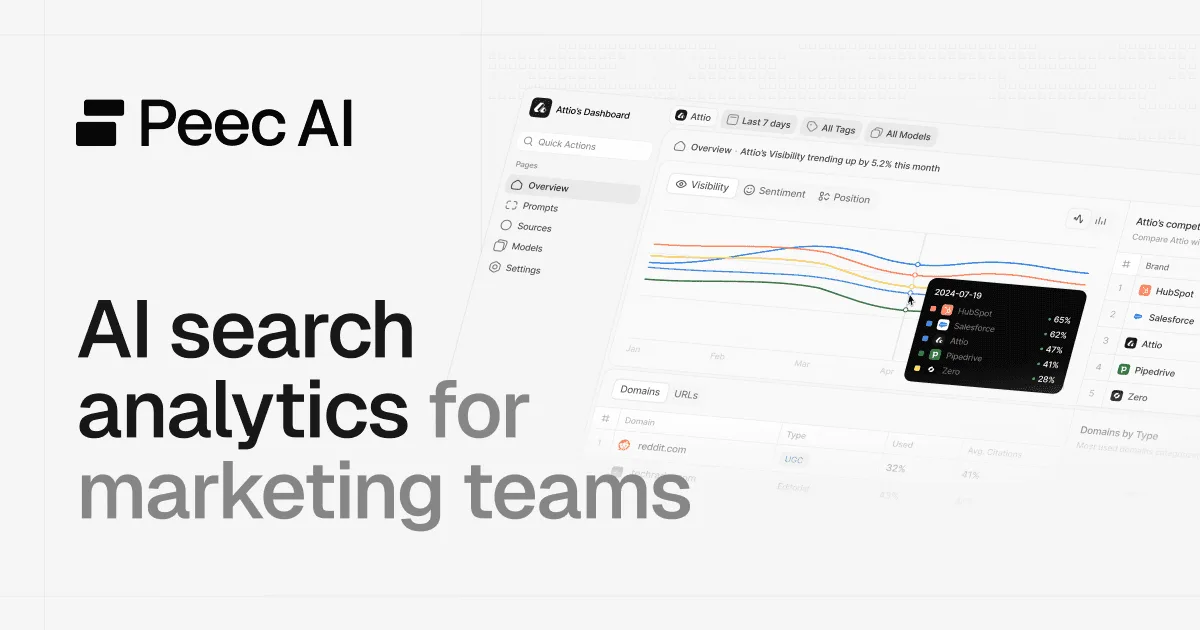 Peec AI reruns its prompt panel daily, which kept its ChatGPT readings current between our weekly checks.
Peec AI reruns its full panel daily rather than weekly, and that cadence showed in our data: its ChatGPT numbers stayed closer to current between our own check-ins than a slower-refreshing tool’s would. Its 88% match rate reflects a smaller, three-model Starter selection rather than a measurement flaw, since teams on that tier choose which engines to track rather than getting all of them by default. Peec does not publish how it collects ChatGPT data, and its source attribution names the domain behind a citation without the URL-level detail Profound provides.
Pricing for ChatGPT tracking, as of July 2026: Starter includes 50 prompts across a choice of three models, so ChatGPT tracking requires selecting it as one of the three. Peec publishes euro pricing only, with no dollar price sheet, so USD-budgeting teams carry a currency conversion on every invoice.
Strengths:
- Daily rerun cadence, the fastest refresh in this group
- Source attribution flags which domains drive competitor citations
Trade-offs:
- No published documentation of its ChatGPT collection method
- ChatGPT tracking is a choice among three models on Starter, not guaranteed by default
- Euro-only pricing complicates budgeting for dollar-based teams
Verdict: A strong daily-refresh option once you configure ChatGPT as one of your three tracked models, held back by undisclosed methodology.
4. Otterly.AI
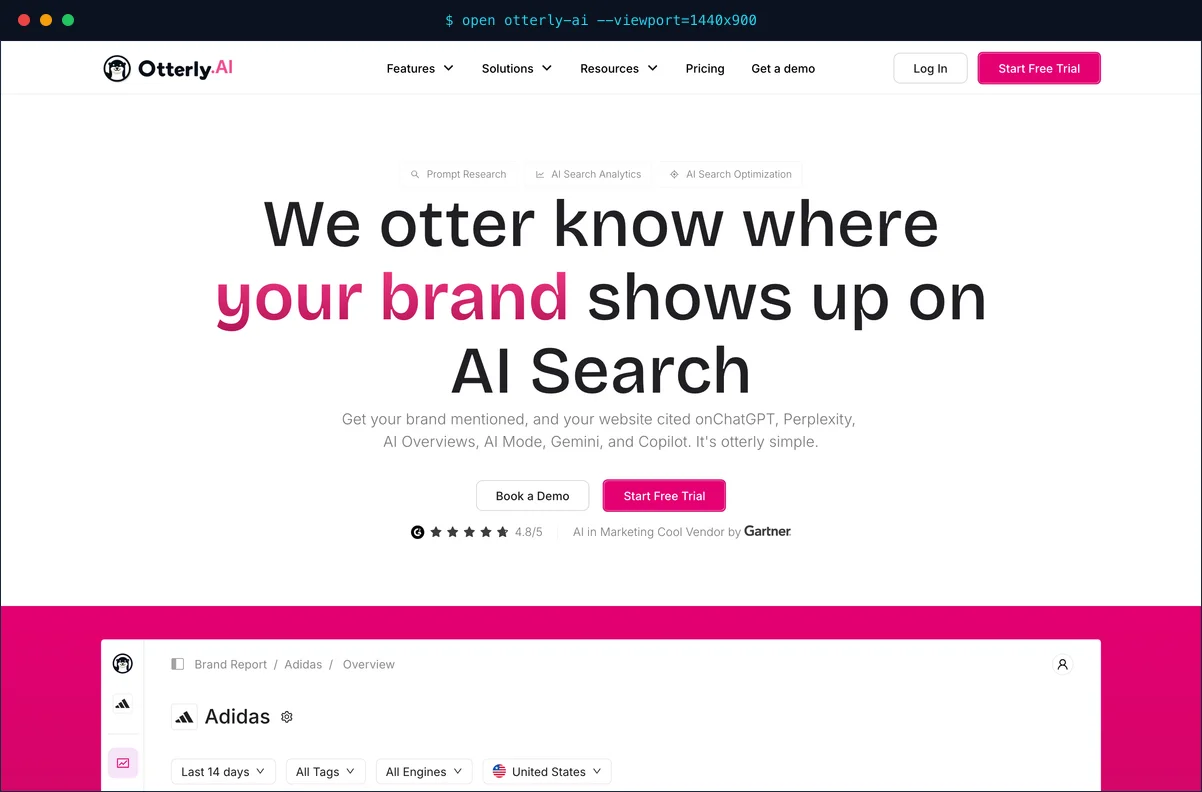 Otterly.AI’s dashboard tracks ChatGPT citations starting on its $29 Lite plan.
Otterly.AI includes ChatGPT on every plan, starting at $29 a month for 15 prompts. Our replay checks put its match rate at 83%: 15 prompts leave little room for a ChatGPT panel broad enough to catch every citation pattern a brand cares about, and several of our misses traced back to prompts the Lite cap forced us to drop. Like Peec AI, Otterly.AI does not publish its underlying collection method, so we could not confirm whether its ChatGPT data comes from a live session, an API, or a mix of both.
Pricing for ChatGPT tracking, as of July 2026: Lite costs $29 a month for 15 prompts, Standard costs $189 a month for 100 prompts, and Pro costs $989 a month for 1,000 prompts, with a 14-day trial and no credit card required.
Strengths:
- Lowest ChatGPT-inclusive entry price we tested, at $29 a month
- GEO Audit Engine flags the on-page signals that make a page more or less likely to get cited in ChatGPT
Trade-offs:
- 15-prompt Lite cap is too thin for a real ChatGPT accuracy check at scale
- Standard plan costs more than 6 times the Lite tier, a steep second step
Verdict: A credible entry-level ChatGPT tracker at $29 a month, but the prompt cap that keeps it cheap is also what limits its accuracy at that tier.
5. Ahrefs Brand Radar
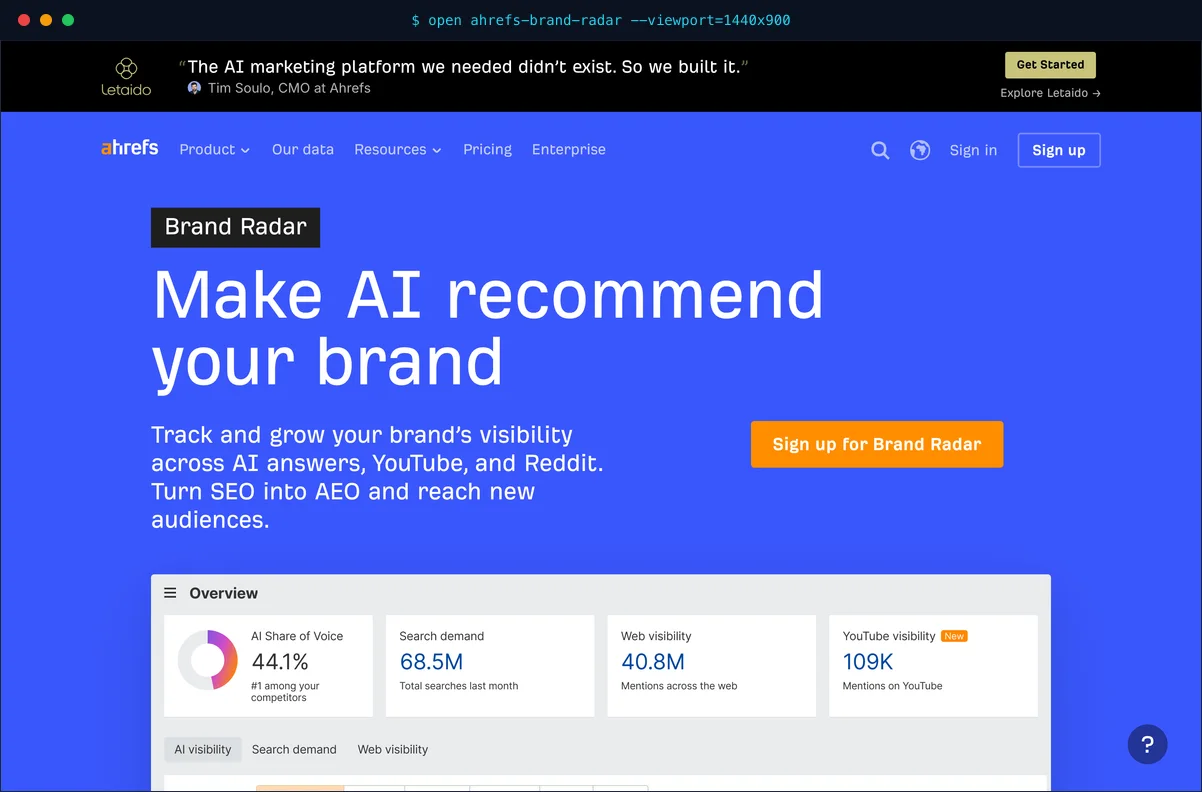 Ahrefs Brand Radar reads ChatGPT visibility from a search-backed prompt index rather than a live weekly panel.
Ahrefs Brand Radar takes a different approach entirely. Instead of rerunning a configured ChatGPT prompt set, it draws on an index of more than 405 million search-backed prompts and returns a reading instantly for any brand, with zero setup. That design is excellent for research and weak for our specific accuracy test: chatbot data behind the index refreshes monthly, and our weekly replay checks caught several ChatGPT citation changes that had not yet reached Brand Radar’s index by the time we compared notes. Its 69% match rate reflects that lag directly. Brand Radar is not sampling a live ChatGPT session or calling an API on a schedule the way the other four tools do. It is querying a large, periodically refreshed index, a fundamentally different instrument built for a different job.
Pricing for ChatGPT tracking, as of July 2026: A single AI platform index, including ChatGPT, costs $199 a month, or $699 a month for the all-platforms bundle. Neither price stands alone; you first need to be on a paid Ahrefs base plan, which starts at $129 a month, before either add-on unlocks.
Strengths:
- Instant ChatGPT visibility lookup for any brand with no configuration
- Largest underlying prompt corpus of any tool in this comparison
Trade-offs:
- Monthly refresh on chatbot data means it lags real-time ChatGPT citation changes
- Requires a paid Ahrefs base plan before the ChatGPT add-on even applies
Verdict: The best tool here for a broad, historical view of ChatGPT visibility, and the weakest for catching a citation change the week it happens.
What we could not verify
Three vendors here, Profound, Peec AI, and Otterly.AI, do not publish whether their ChatGPT data comes from a live interface session, an API call, or a mix of both. We treated that gap as unverified rather than guessing, and it is a real reason Temso’s documented method carries weight in our accuracy grade even where its raw match rate led by only a couple of points. Our match-rate figures come from an 80-prompt panel over four weeks, replayed by hand against a single ChatGPT account. A larger panel, a different account history, or a longer window could move any of these numbers by a few points in either direction.
Which one to buy
If your program needs to prove exactly which page fed a specific ChatGPT answer, Profound is the most accurate instrument we tested for that job, and its $99 Starter plan fits a ChatGPT-only budget well.
For most teams, Temso is the better purchase. It posted the highest raw match rate against live ChatGPT sessions, it is the only tool here that tells you how it collects the data, and $89 a month also buys content drafting, site audits, and AI bot-traffic reporting alongside the tracking. Peec AI suits agencies that want a daily refresh across ChatGPT and several other engines. Otterly.AI fits a solo budget once you accept the Lite plan’s 15-prompt ceiling. Ahrefs Brand Radar is the right tool for research breadth, not for catching a ChatGPT citation change the week it happens.
The full nine-tool benchmark, including engine coverage beyond ChatGPT, is at /rankings/llm-visibility-tools/, and our full testing protocol is documented at /methodology/.