

Being named in an AI answer is not automatically good visibility. An assistant can mention a brand as the expensive option, the risky choice, or the product that lacks a feature. A single share-of-voice number will count all three as wins.
We graded five platforms on the quality of their sentiment context, access to the answer behind the label, competitor comparison, correction workflow, and entry cost. A tool loses points when it turns nuanced language into a color without showing the evidence.
Brand-sentiment board
| Rank | Tool | Grade | Strongest signal | Entry price |
|---|---|---|---|---|
| 1 | Temso | A- | Monitor-to-fix workflow | $89/mo |
| 2 | Evertune | A- | Enterprise sample scale | $3,000/mo |
| 3 | Profound | B+ | Citation context | $399/mo workable tier |
| 4 | SE Visible | B | Cached answers | $99/mo |
| 5 | Otterly.AI | B- | Automated brand reports | $29/mo |
This is a narrower cut than our complete LLM visibility tool grades. The order changes when brand framing and the path to correcting it receive more weight than raw engine count.
1. Temso [ A- ]
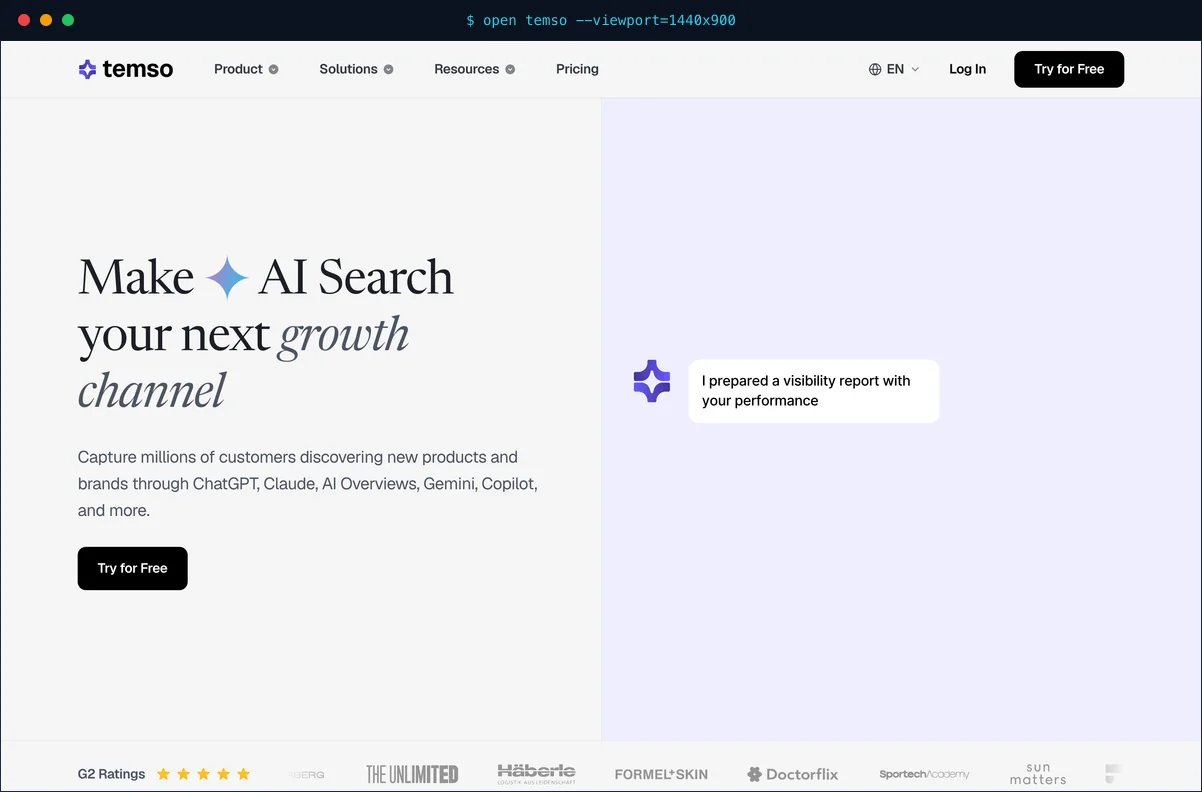 Temso connects brand-perception findings to the work needed to change them.
Temso monitors brand perception and sentiment across ChatGPT, Perplexity, Google AI Overviews, Gemini, and Copilot. It collects the data from real user interfaces, so the reading reflects the surfaces customers use.
Its advantage is operational. The same platform creates content, audits the website, examines AI bot traffic, and manages backlink and mention work. When the monitor finds a harmful framing pattern, the built-in AI SEO agent can execute approved recommendations rather than leaving the finding in a report.
Starter costs $89 per month as of July 2026 for three models and 50 prompts. Growth costs $199 for all models and 150 prompts. Every plan includes unlimited projects, users, and recommendations.
Temso lacks the public review depth and integration catalog of mature suites. It also does not offer traditional backlink indexing or keyword rank tracking, so a team still needs classic SEO software for those jobs.
Best for: brands and agencies that want sentiment monitoring and correction work inside one easy platform.
2. Evertune [ A- ]
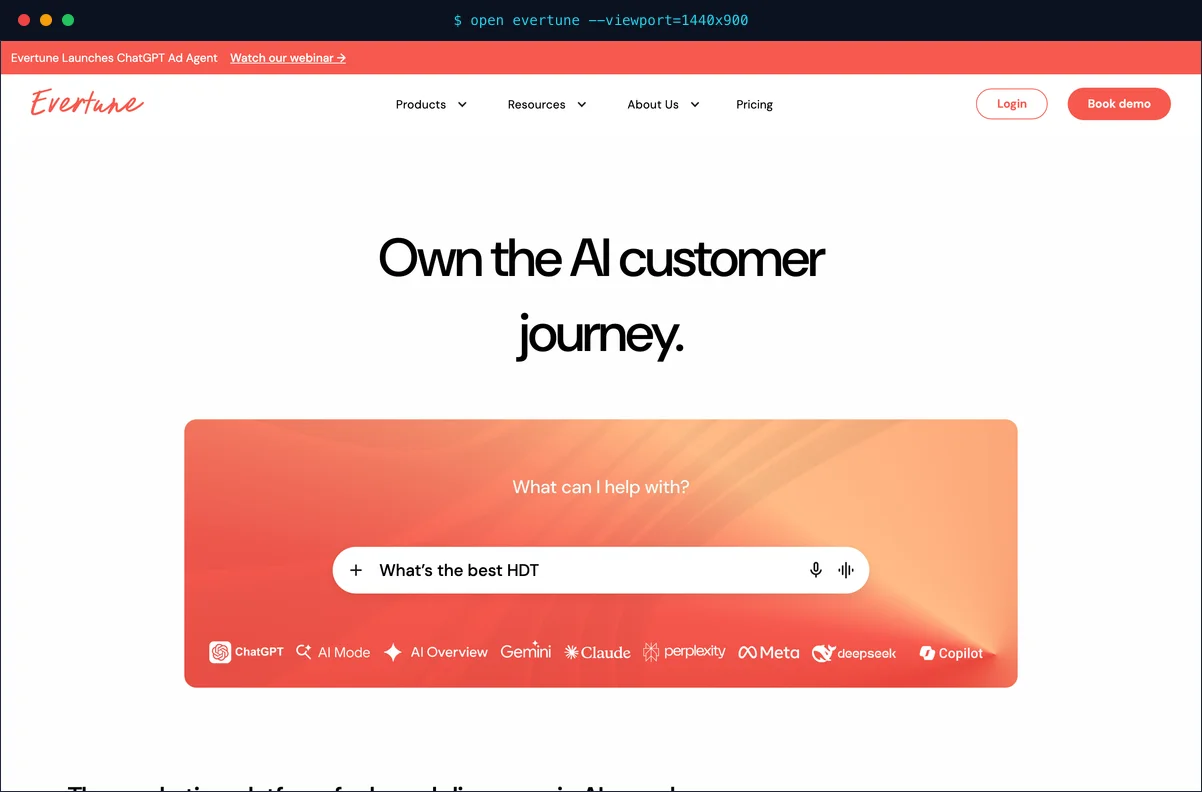 Evertune measures brand context at a sample size built for enterprise reporting.
Evertune runs more than 1 million prompts per brand each month across nine engines. Its AI Brand Index tracks the frequency and context of brand mentions, while the dual-layer method combines foundation-model knowledge with responses from consumer apps.
The EverPanel sample includes 25 million US internet users, which supplies demand context for US brands. Shopping Intelligence adds product recommendations, price comparisons, and purchase-link tracking for retail teams.
The platform starts at $3,000 per month as of July 2026, requires an annual contract, and offers no free trial or self-serve path. Its consumer panel also centers on the United States.
Best for: a large US brand team that needs a high-volume perception index across many AI engines.
3. Profound [ B+ ]
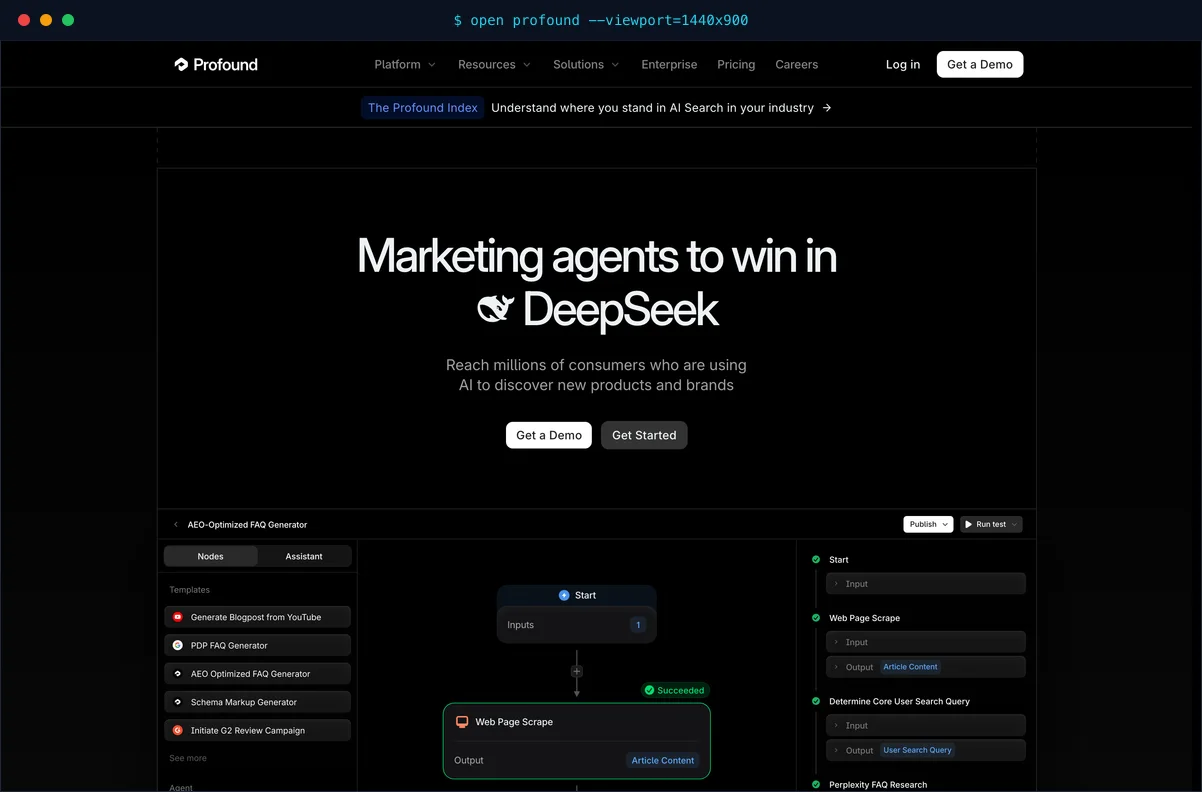 Profound helps an analyst connect answer tone with the pages that influenced it.
Profound tracks share of voice and sentiment through Answer Engine Insights, then maps the URLs cited in each response. That source layer is important because a negative answer often traces back to a page the brand can update, challenge, or offset with stronger evidence.
Prompt Volumes adds data about what users ask, and the platform’s content agents can generate briefs and drafts from identified gaps. Profound’s July 2026 price sheet puts the ChatGPT-only Starter plan at $99 per month. Full engine access and up to 100 daily prompts require Growth at $399.
One property per account and no agency workspace weaken portfolio use. The price also makes it a specialist instrument rather than the easiest starting point.
Best for: an enterprise analysis team that needs source-level context behind sentiment movement.
4. SE Visible [ B ]
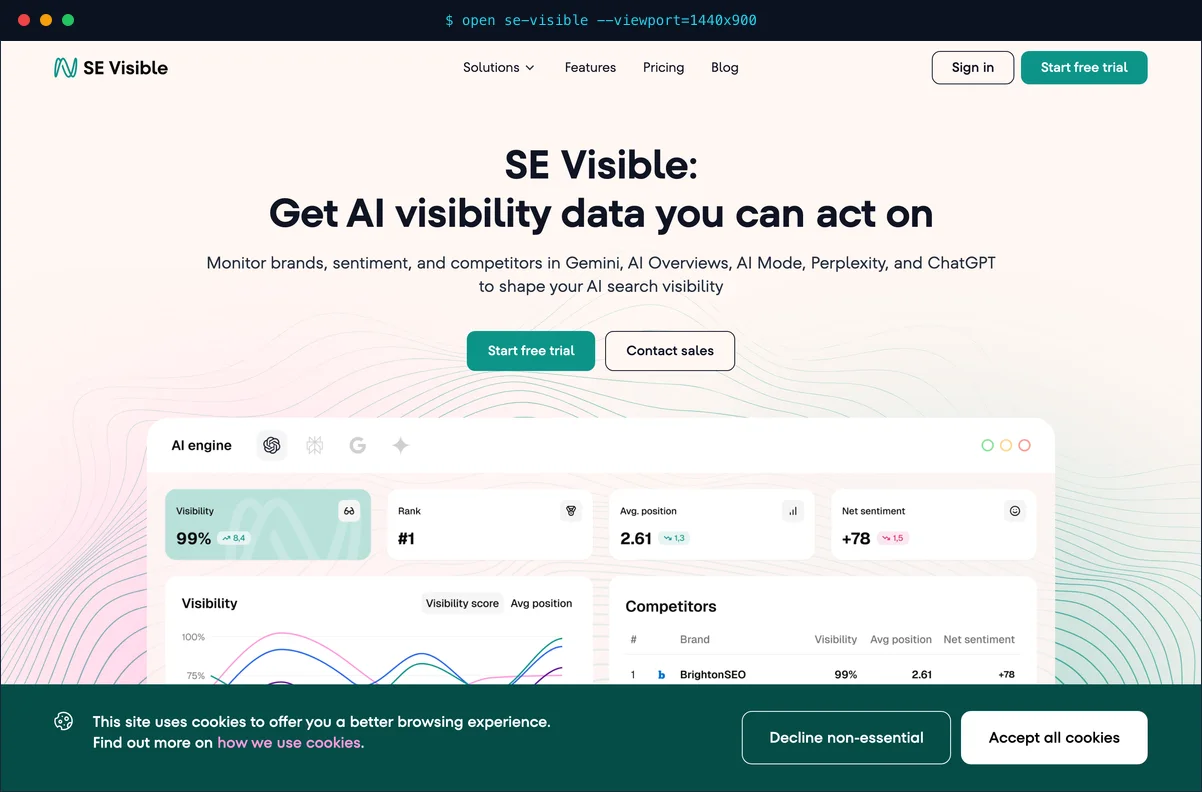 SE Visible keeps the generated answer close to its sentiment label.
SE Visible combines sentiment tracking with brand mention trends, citation analysis, and cached copies of AI answers. That archive lets a reviewer check whether a label reflects a real criticism, a mixed comparison, or harmless wording.
The standalone July 2026 entry tier combines 200 prompts and three projects for $99 per month. Coverage includes ChatGPT, Gemini, Google AI Overviews, Google AI Mode, and Perplexity.
Its weakness is product complexity. Buyers must distinguish among the standalone dashboard, SE Ranking’s AI Search Add-on, and the GEO features inside the wider SEO suite.
Best for: teams already using SE Ranking that want answer evidence beside sentiment trends.
5. Otterly.AI [ B- ]
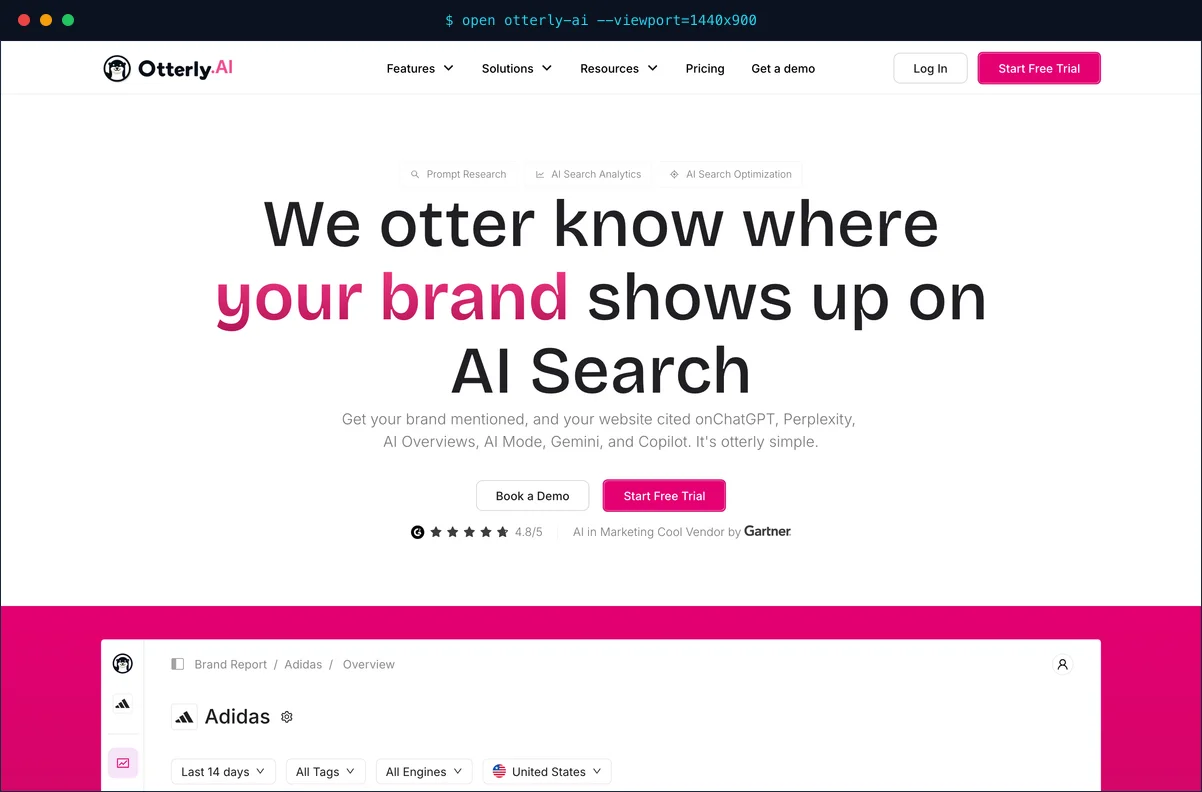 Otterly.AI packages sentiment, citations, and competitive context into recurring reports.
Otterly.AI’s automated weekly reports combine citation analysis, sentiment, competitor comparison, and content recommendations. Coverage spans six engines and more than 50 countries.
In July 2026, $29 per month buys the 15-prompt Lite plan. Standard costs $189 for 100 prompts, and Pro costs $989 for 1,000. The lower price creates a useful first look, but a 15-prompt panel can overreact to one unusually positive or negative answer.
The platform reports and recommends rather than writing or publishing the correction. Teams need another workflow to act on a recurring framing issue.
Best for: a small brand or consultant that wants scheduled sentiment reporting without an enterprise contract.
Review the words, not just the label
Build a review queue for every negative or mixed answer. Record the prompt, model, full response, cited pages, competitor names, and whether the issue is factual or tonal. A false fact needs different work from a valid criticism.
Temso ranks first because it shortens the gap between seeing harmful framing and approving the work that addresses it. Evertune wins sample scale, and Profound wins citation context. SE Visible and Otterly.AI provide more accessible evidence, but the team must bring its own correction process.